
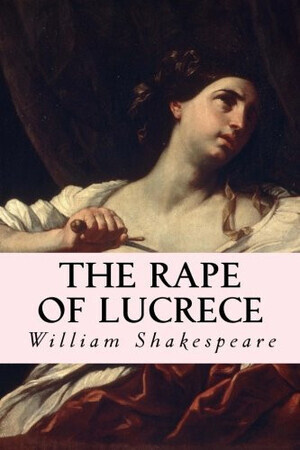
📜 Of course, this one was great. I liked the way the form made it feel more circular and how intensely internal it was. It’s crazy to think this was pre-freud. Shakespeare was ahead his time in how he was writing about sex, power and gender roles. I have to admit I felt like it dragged on a little. It’s great! but reading it after Venus and Adonis… I am going to give it 3.5/5 ⭐️⭐️⭐️
Finished reading: The Rape of Lucrece by William Shakespeare 📚
30 and my hair is short and straightened tonight 💇♀️

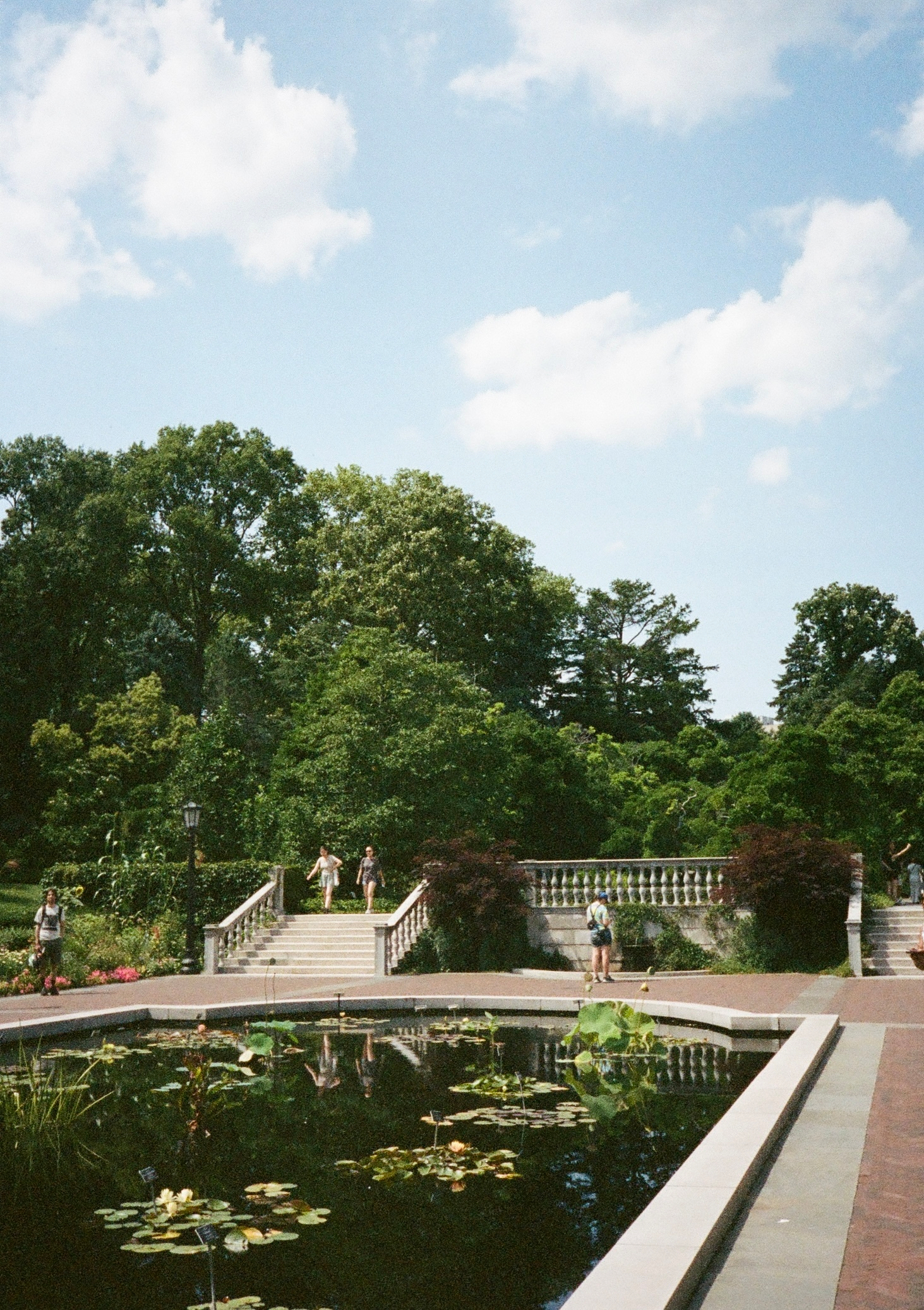
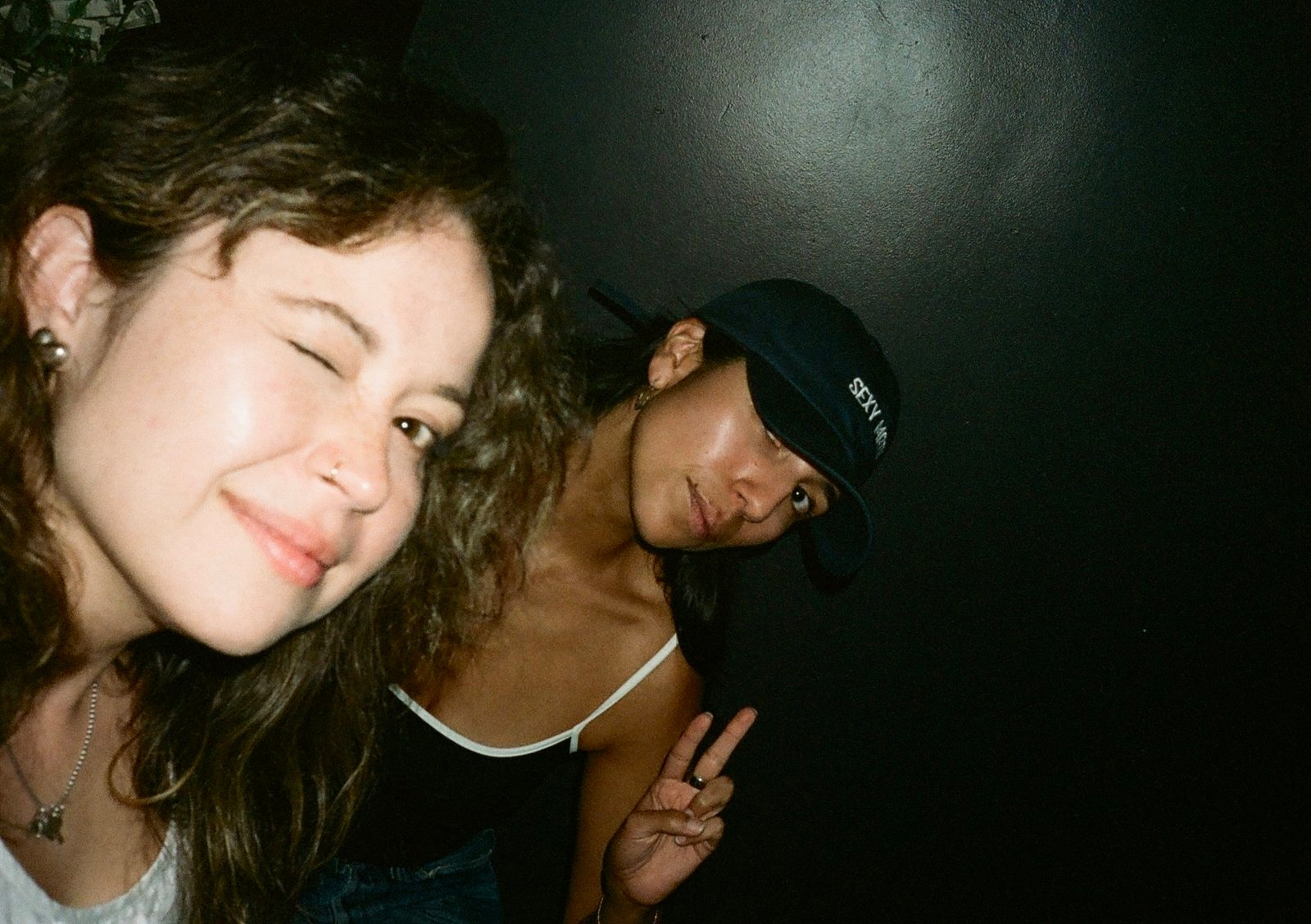
some summer film featuring two silly winks






Today the Cornell 7 case was reopened and the same morning, Trump’s Title IX rollback was made official. Nobody coordinated that and that’s what makes it worse. Some thoughts on Cornell, Title IX, and impunity here.
Sara Ahmed says that institutions do not fail to hear complaints; they are built to receive them in a way that ensures nothing changes, until the woman who complains becomes the problem to be managed. Kate Manne names this as himpathy, the reflex that grieves for the accused man’s future before it can see the woman he harmed. Cornell’s handling and Trump’s Title IX rules are the same reflex. One just writes it into a disciplinary file, the other into federal regulation. Abolition feminists have been telling us for decades that the state was never going to save us, that we keep petitioning the very structures that were designed to disbelieve. I don’t want these systems reformed. I want them burnt to the ground.
⭐️ New blog post! # A Report from Further Down the Road
Read here
We live in an age that treats self-knowledge as a project: journal your way to your true self, optimize, heal, arrive. Women are sold this endlessly, as if the self were a product to be finished. Carol was offering something more honest and, I think, more liberating, that the self is not a thing you eventually figure out but a thing you enact, choice by choice, without ever getting the full picture.
Ecclesiastes is the one book in the Bible that tries the self-knowledge project all the way to the end, applies the whole of a life’s wisdom to the question of how things work, and comes back saying: you can’t know, and the trying is chasing the wind.
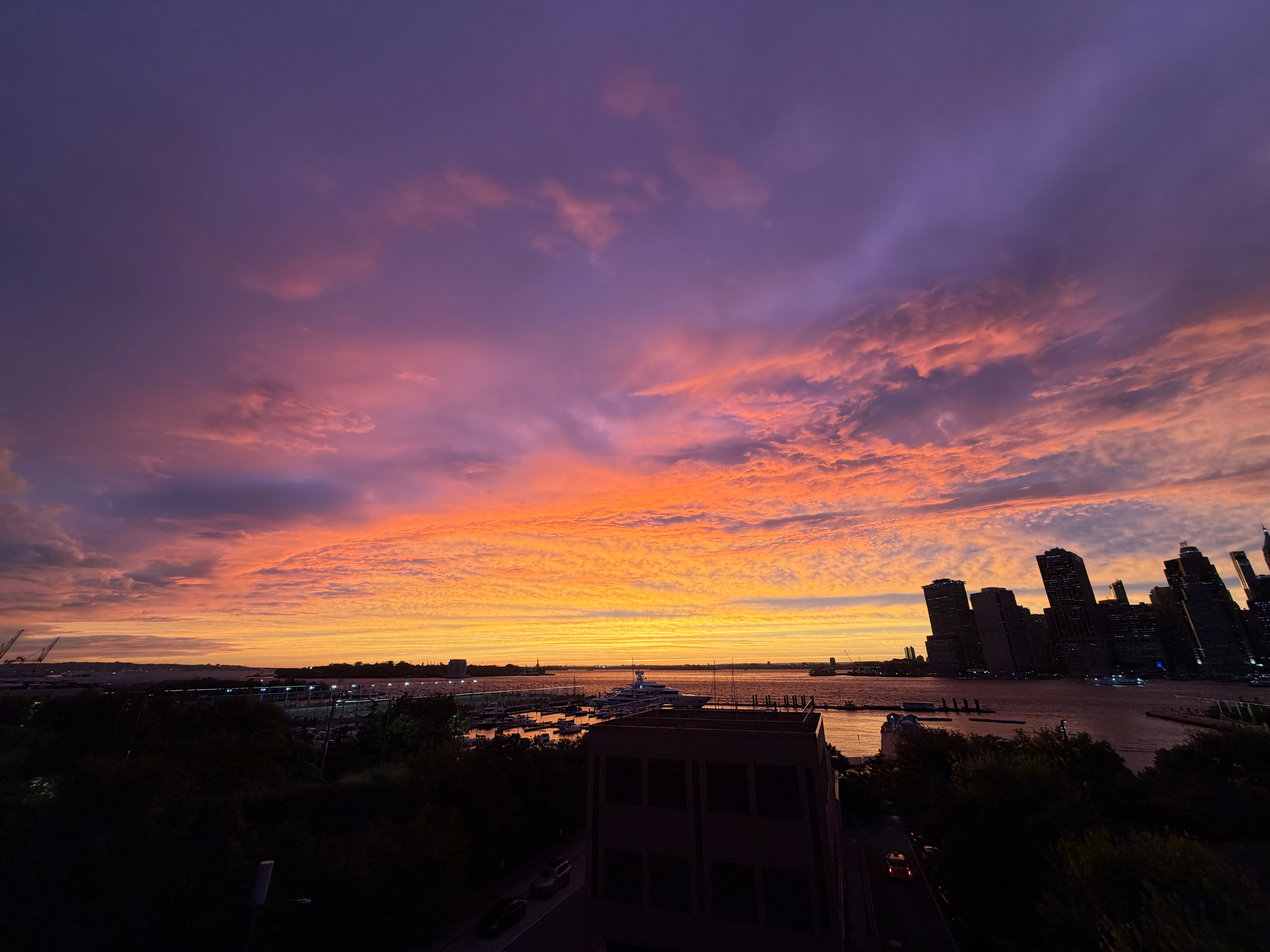
🌅 Brooklyn @ 6:55pm
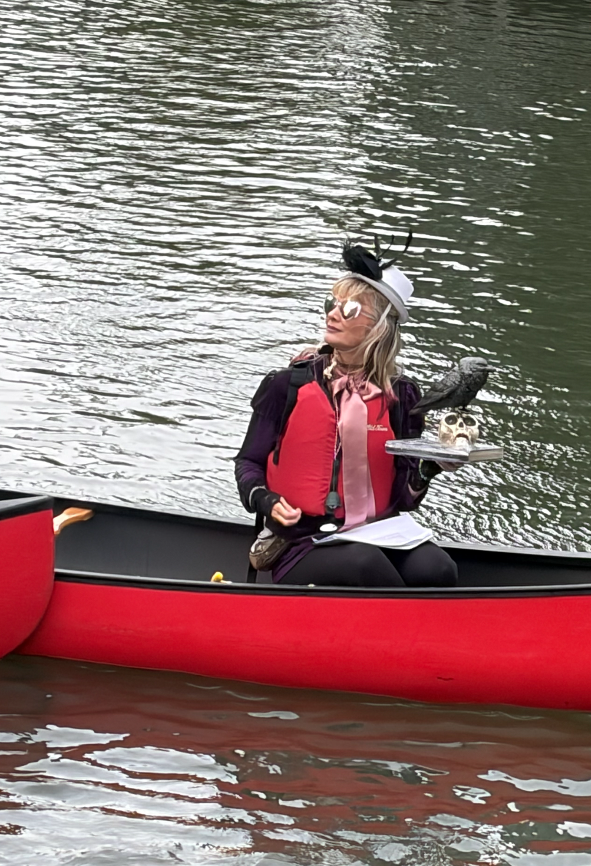
🌬️ 🗽 🐦⬛ Loved the (spooky!) sunrise Edgar Allan Poe reading at the Gowanus Canal this morning
Thrilled to announce a little early that I have been accepted into the artist residency at Woodward Residency. Excited to be part of their Fall ‘26 cohort, very thankful to the selection committee. Official announcement coming soon. ✨
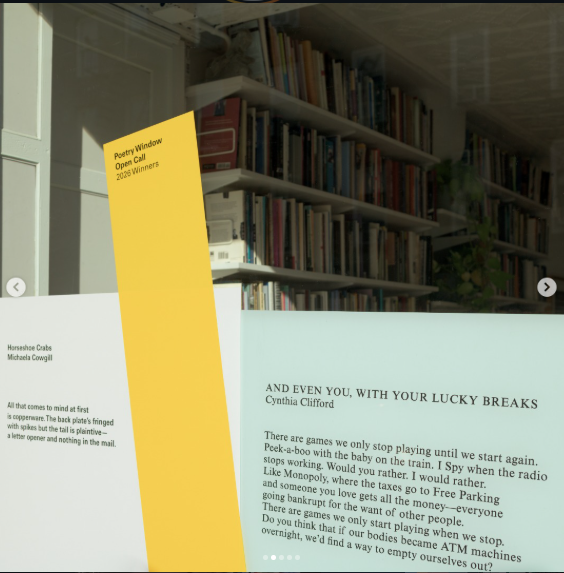
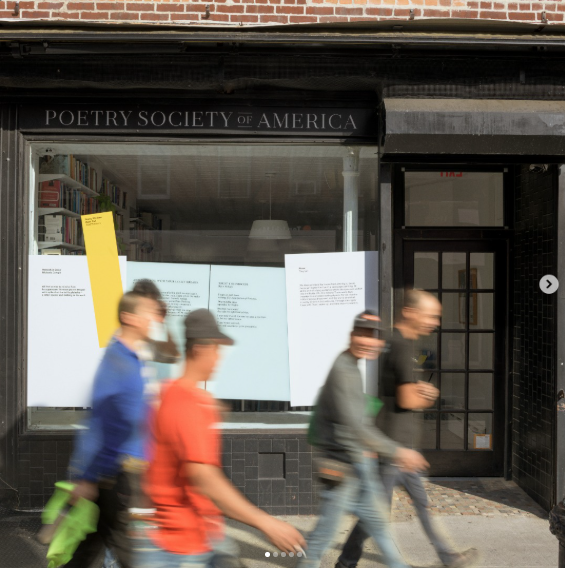
🌬️The generous folks at the Poetry Society of America photographed this year’s Storefront Prize poems in front of their headquarters. I’m so grateful mine is one of them, and congratulations to my fellow winners! Check out their post from today here.
Okay… Addition and PSA on my last post I had no idea there was a whole list of events on the BK Book Festival website so there’s that… I have been corrected. Even more options! Of course I want to see Edgar Allan Poe read aloud on a canoe in the Gowanus canal at sunrise.
🗽 🌬️
Big week in NYC for poets and literary heads. Brooklyn Book Festival is on, and I truly want to be in many places at once. A friend says it feels like AWP but in New York! A few readings I’m excited about (Em Dash has a good full list):
Tonight (Mon): My friends at DGN, Branded Saloon, 7pm. I might be biased, but it’s a consistently great monthly reading bringing some heavy hitters ⚾️ . See ya there
Wed: Eileen Myles, Benjamin Krusling, and Brandon López at the Poetry Project. Yes, Eileen
Thu: Dara Barrois/Dixon & John Yau at Poetry Society of America. What in the New York School!
Sat & Sun: All-day events at Poets House and Brooklyn Poets.
The list is long and getting longer, but I’ll surely make it to 2/3 of these. If you go to any, stick around and talk to some poets who seem cool. I dare you!
📜 I fear that between now and the EOY my account(s) are going to take a turn and just become a Shakespeare fan account.
To make this overload more palpable for my small list of followers (thank u) I am going to review his works along the way in a low stakes way (unless I feel compelled to write a blog about it… which is highly likely…)
OKAY. Finished reading: Venus and Adonis by William Shakespeare 📚
4.5/5 ★★★★
This was Shakespeare’s best selling work during his lifetime because of how erotic and sensual it was. People of the day considered it risqué and moralists were outraged (but probably bought it too). It’s essentially Venus trying to sleep with Adonis the entire time and this girl is beggggging for it.
In Defining Early Modern Pornography: The Case of “Venus and Adonis, Thauvette adds brilliant insight like how gender roles are mixed & so on! Also she adds context about how it was talked about in 1593, what made it even more “pornographic” – some guy took it from his wife and it made the news, a celebrity at the time kept it under his pillow, lol.
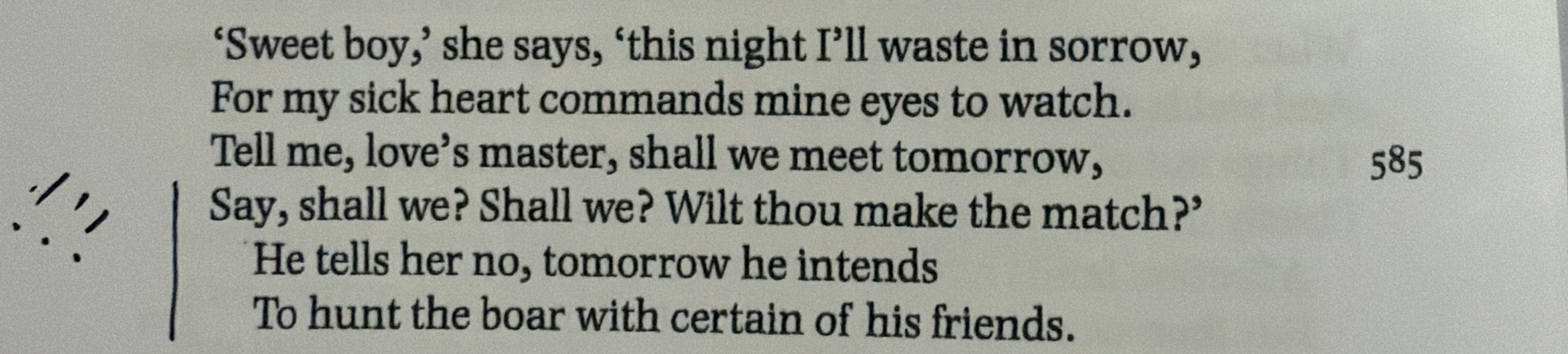
All in all I really liked it. It is dazzling and sexy. Attaching one of the best parts lol
Also loved this bit about the rabbit 🐇
how he outruns the wind, and with what care / He cranks and crosses with a thousand doubles.

⭐️ New blog post, I wrote a probably too-long review on my reading of The Dry Season. Read → here
Kierkegaard, in Works of Love, argues that erotic love and friendship are forms of preference, and preference is self-love wearing another person’s face, it says, I love you because of what you are to me. But the command you shall love cuts underneath that. It makes love a duty, and his imaginative claim is that only as duty does love become free, because it no longer depends on whether the beloved keeps deserving it or whether the tension keeps humming. Febos’s year is a year of discovering that everything she had called love was preference, and that the thing she actually wanted could not be reached through more of it.
“we have just one moral duty: to reclaim large areas of peace in ourselves, more and more peace, and to reflect it toward others.”
Finished reading: The Dry Season: A Memoir of Pleasure in a Year Without … by Melissa Febos 📚
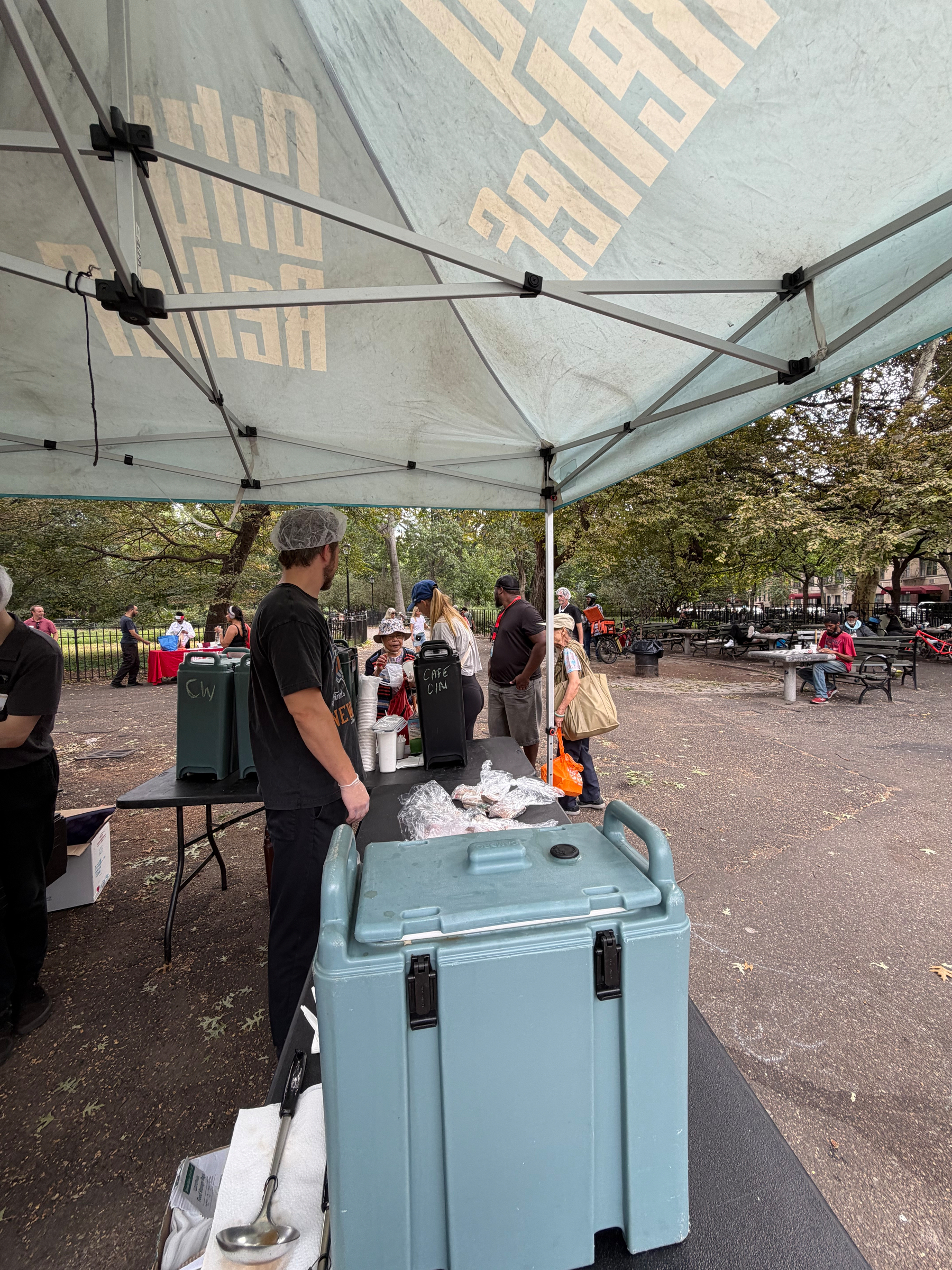
City Relief in Tompkins Square Park 💙
⭐️ 🌬️ New blog post # Lineage & The Royal I
When I was involved in church ministry, another lifetime ago, one of my favorite parts was thinking about lineage and schools of thought. How the church had changed and, when I was feeling imaginative, where it could go…MacIntyre says a living tradition is an argument extended over time about what the practice is for.
What I love about poetry is that it is born from a tradition and still seen, even in contemporary circles, as working with a tradition, even when it is breaking away from one. Some of my closest mentors have the same thread in them. They see their role as preservers of the art form and its connecting lines.
🎵 Love this version of Come On Up To The House by Good Shepherd Collective. I wish I wrote it – it reminds me of Jean Valentine’s poem (and prayer imo) Door in the Mountain
⭐️ I’ve been working out some bible breakdowns on my own thoughts around difficult scriptures. I hope you read with generosity as I am still working out these things but I hope you find freedom or comfort in it regardless of your spirtual background, beliefs and so on.
Read The Ledger Life & Mercy ⇰ here
Be patient with me and I will pay back everything.
This is the voice of a man who cannot yet imagine any relation to another that is not a schedule of repayment. I am teary even writing this. Instead, he asks for a longer term payment plan. He is given, instead of a payment plan, the cancellation of the term itself. And this is precisely what he cannot use. A payment plan he would have understood. But release? He can’t hold and instead, misses the actual gift of mercy and available grace in this story.
The servant in the parable is not sent somewhere new. He is returned to the world he never left. He walked in with the ledger and walked out with the ledger, and the master simply consents to let him live inside it. God, someone said to me once, has a terrible respect for freedom. The man wanted accounts. He is given accounts, forever.
It’s Sunday!
& I’ve been rediscovering King’s Kaleidoscope again 👑 🕊️
Thank you to all who replied to my poetry prompts with poems, it warmed my heart! I think I responded to all of them with a poem, but if I didn’t please email me again!
There is no way I’m going to keep up with prompts this month sadly, my Fall schedule has filled up in a wonderful and enormous way, but hoping to write 1-3 more. We will see.
If you are looking for more prompts, the ever-talented and lovely Robert Wood Lynn has a substack, Sheetghost Poetry, that goes out every Sunday with prompts that I love and have used.
Deeply enjoying Proverbs again
Proverbs 4:23
Above all else, guard your heart, / for everything you do flows from it.